

Recent Soft Matter Seminars Explore Lung Mechanics and Cellular Organization
Posted in ISM Stories News Story
ISM recently hosted two Soft Matter Seminars that showcased the breadth of soft matter research, from the mechanics of lung interfaces to the physical principles underlying gene regulation. Featuring speakers from ETH Zurich and Georgetown University, the talks brought together researchers across disciplines to explore how soft matter concepts inform challenges in biology, materials science, and engineering.
Jan Vermant – ETH Zurich
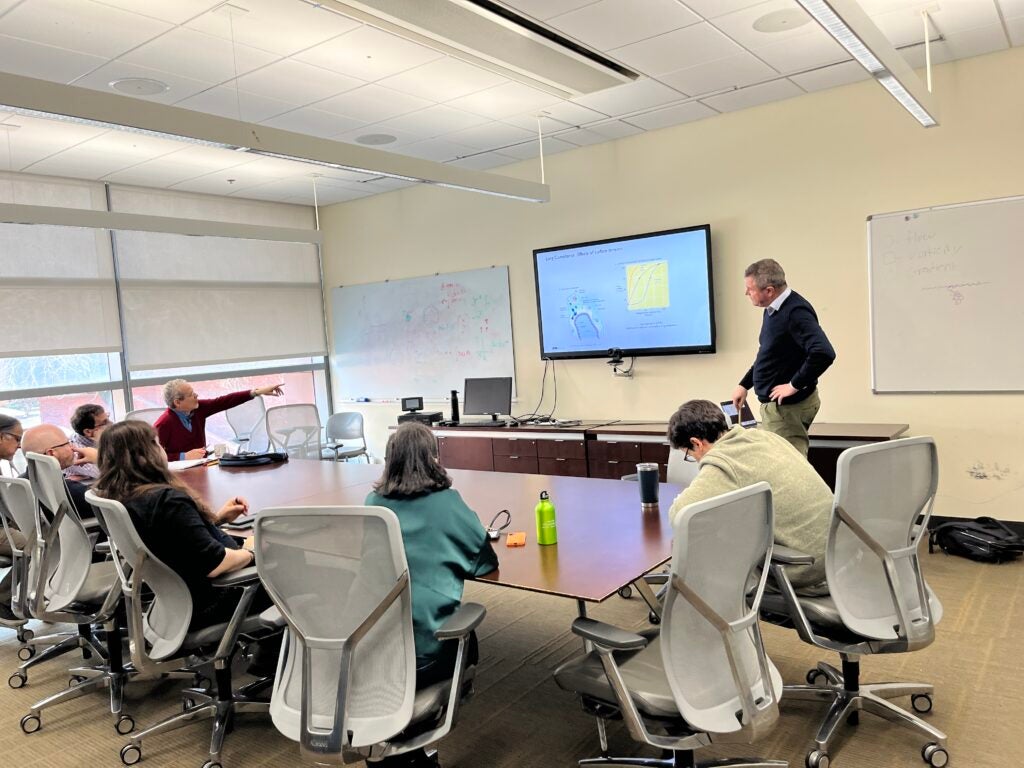
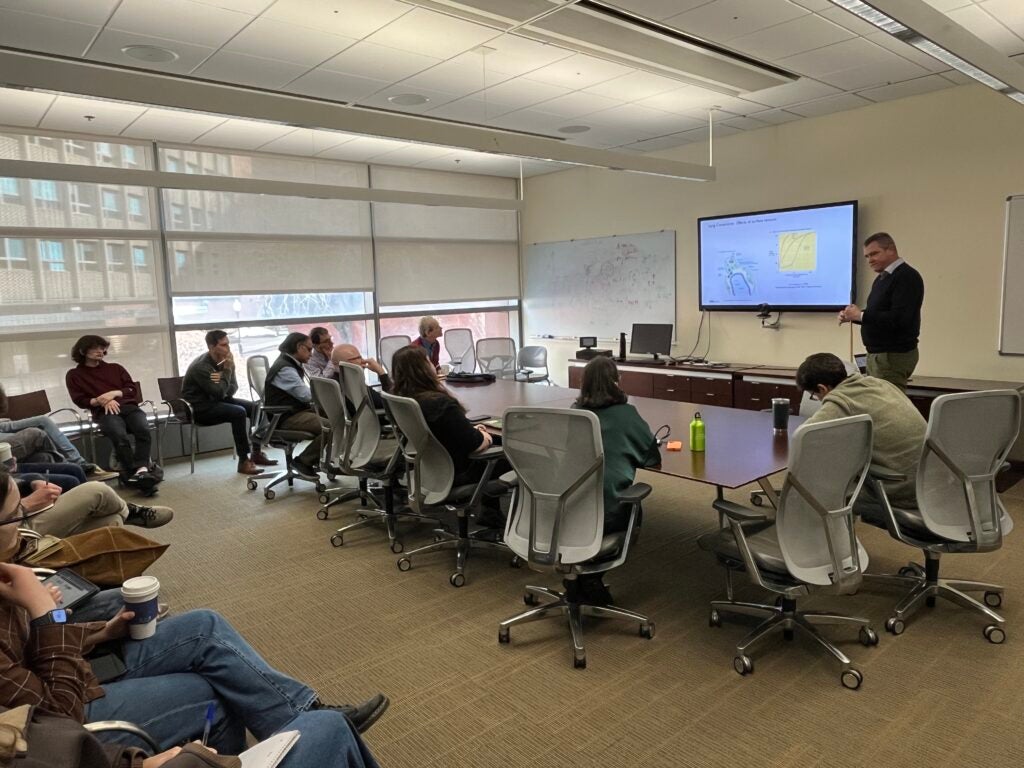
ISM welcomed Jan Vermant, professor at ETH Zurich, for a seminar titled “Why Do We Sigh? Nonequilibrium Interfacial Mechanics of Pulmonary Surfactant Films.” Vermant examined the complex behavior of pulmonary surfactants—the lipid–protein films that line the air–liquid interface in the lungs and enable efficient breathing.
While surfactants are often described by their ability to lower surface tension, Vermant demonstrated that lung mechanics are governed by more complex nonequilibrium interfacial processes. His research shows that cyclic compression during breathing drives microstructural reorganization within the surfactant layer. Periodic “sighs” act as a mechanical reset, enriching the interface with saturated lipids and forming mechanically robust films that help maintain lung compliance.
By combining interfacial rheometry with structural techniques such as neutron reflectometry and Raman spectroscopy, Vermant’s work connects mechanical stress to changes in film structure, composition, and multilayer formation. These insights not only advance understanding of pulmonary physiology but also offer broader design principles for soft interfacial systems such as emulsions, foams, and bio-inspired materials.
Sreejith J. Nair – Georgetown University
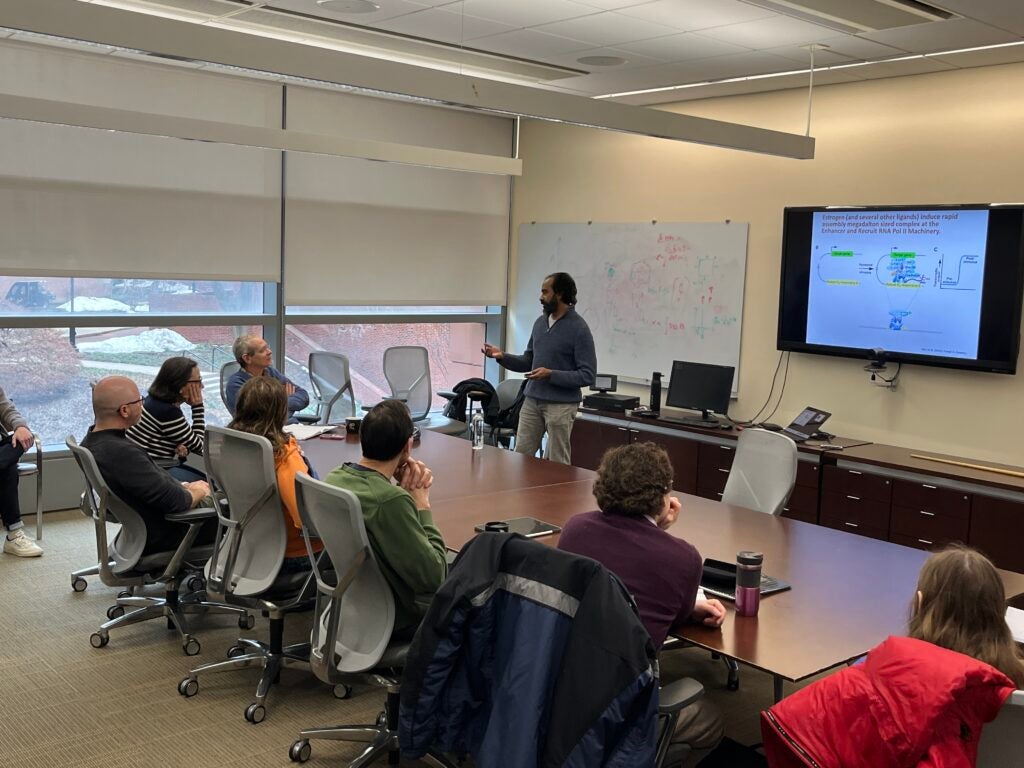
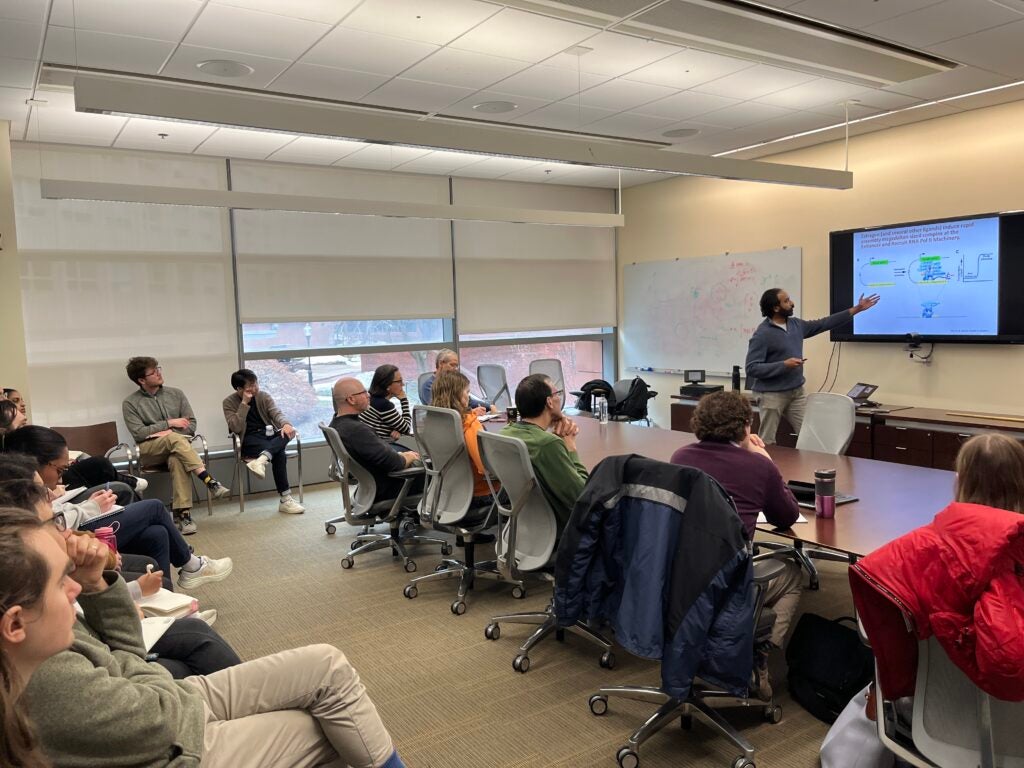
In another seminar, ISM hosted Sreejith J. Nair of Georgetown University for a talk titled “When Disorder Drives Order: From Transcriptional Condensates to RNA-Mediated Chemotherapy.” Nair’s research explores how cells organize transcriptional machinery into dynamic, liquid-like assemblies known as biomolecular condensates.
These membraneless structures form through networks of weak interactions driven by intrinsically disordered regions in transcription factors and their cofactors. Using the estrogen receptor alpha (ERα) as a model system, Nair’s lab combines genomic, biochemical, and biophysical approaches to study how disordered protein domains and RNA contribute to condensate formation and transcriptional regulation.
His work also examines how RNA–small-molecule interactions influence condensate dynamics and the mechanisms through which anti-cancer drugs affect gene regulation. By applying soft matter principles such as phase separation to biological systems, Nair’s research highlights the growing connections between soft matter physics and cellular biology.
Together, these seminars highlight the interdisciplinary scope of ISM’s research community and the role of the Soft Matter Seminar Series in fostering collaboration and scientific exchange across fields.